A leak above an aircraft bay calls for a roof inspection that accounts for the open span, the door system, and the equipment below. Before work, confirm which aircraft or vehicles need protection or relocation and who controls entry. Mark roof zones, drains, penetrations, and lift access. Operators with facilities in Tustin and Anaheim Canyon should keep separate access and staging plans for each building. The site plan and facility lead determine how the crew reaches each roof area.
Commercial Roof Service555-555-5555
Aircraft Hangar Roofing in Santa Ana, CA
How should a hangar roof leak be traced?
Record the bay, roof section, time, weather, and any visible water path. Ask whether aircraft, maintenance work, electrical systems, or stored equipment sit below the affected area. The facility lead decides what must be moved or covered. Do not enter the hangar or relocate equipment without approval. If the building is active, coordinate the inspection around door movement and vehicle or aircraft traffic.
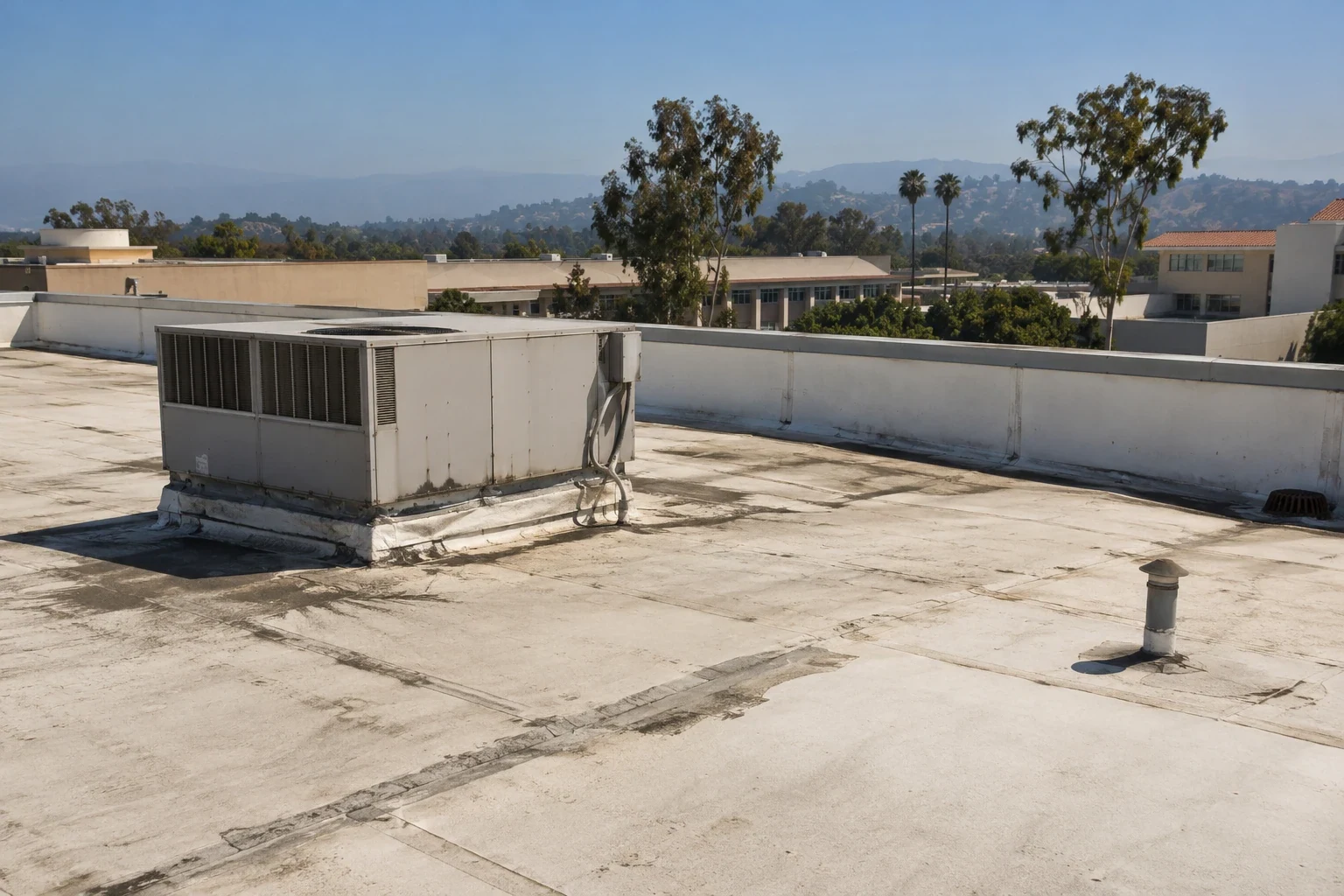
Inspect above and upslope from the report. Check seams, fasteners, curb flashings, penetrations, roof-to-wall transitions, and prior patches. Water can travel along framing before it drips into the bay. A roof inspection should document the visible assembly and any area that could not be reached safely. Set an approved test opening only after interior protection and closure are planned.
What matters on a long-span roof?
Identify roof framing, deck, insulation, membrane or metal panels, fastener patterns, and any movement joints. Large spans can have separate slope directions, high and low bays, and transitions over office or shop areas. Mark those changes on the plan. Inspect panel laps or membrane seams, ridge and eave details, end walls, parapets, and roof penetrations. Record deflection or water marks as observed conditions, not as a conclusion about structural capacity.
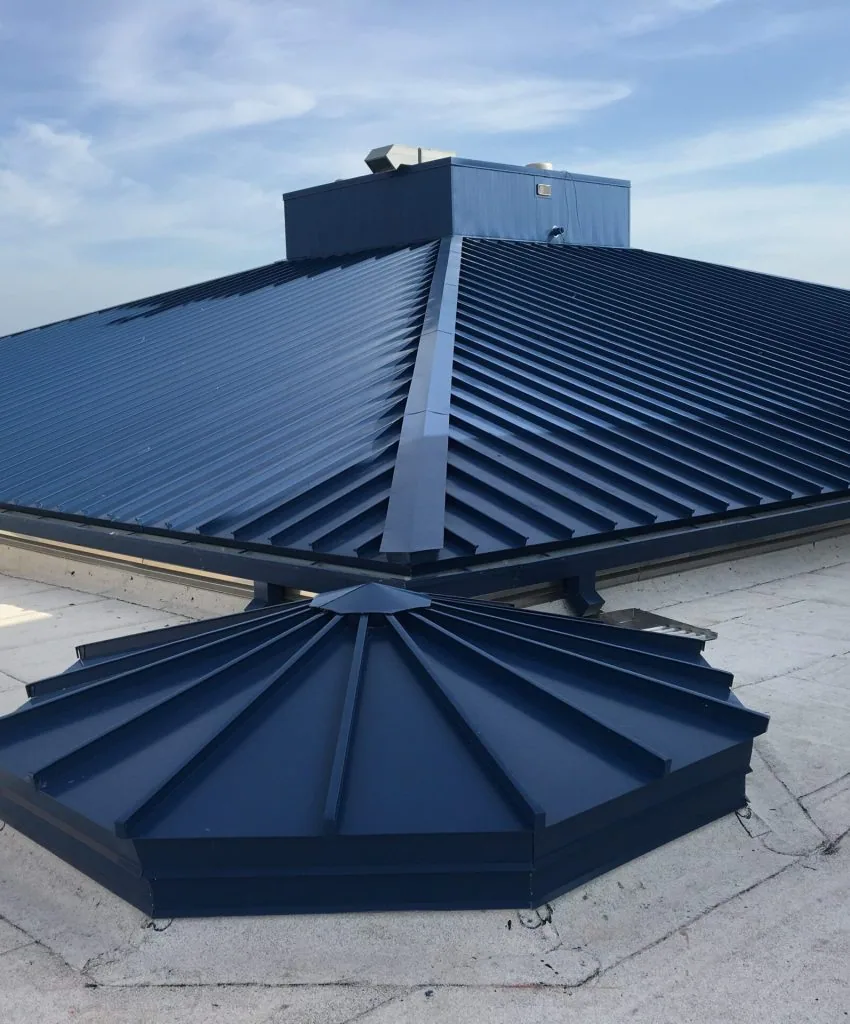
If an assembly includes metal panels, confirm panel profile, attachment, coating, and substrate before selecting a repair. A standing-seam system needs a compatible detail at seams and penetrations; do not assume a surface sealant corrects a loose clip or damaged panel. If the framing or deck appears compromised, notify the owner and request evaluation by the appropriate design professional before loading or opening that area.
How do hangar doors and equipment below the roof affect the work?
Document the door type, track, operator, support points, and travel path. Look for roof flashing at the head, jambs, and adjacent wall transitions. Confirm who can operate or lock out the door and when it can be held in one position. A lift, scaffold, or material drop must not interfere with the track or door movement. Ask the facility lead whether the bay can be secured while a crew works above it.
If a roof repair touches the door head, coordinate with the door contractor before removing flashing or hardware. Assign the final weather seal and any adjustment to the appropriate trade. A new penetration near a track support can affect both roof detailing and door operation. Mark the approved work limit and keep any door-service notes with the project record so later maintenance does not disturb a fresh tie-in.
Agree on aircraft or vehicle relocation, protective covers, sensitive equipment, and a no-entry zone before cutting or fastening. Confirm whether overhead work could create dust, debris, vibration, or a temporary water path. Keep the facility’s safety lead involved in the daily briefing. Roofing crews should not assume they can cover valuable equipment or move it themselves; the owner assigns those responsibilities.
Control hot work, power tools, and material handling under the site’s safety procedures. If the scope requires a roof opening, install approved interior protection and verify that the opening can be closed before the shift ends. Record who checked the bay after work and who released it for normal use. If weather changes or a door cannot close, identify the stop-work contact and temporary protection method in advance.
Where can roof water affect aircraft and service areas?
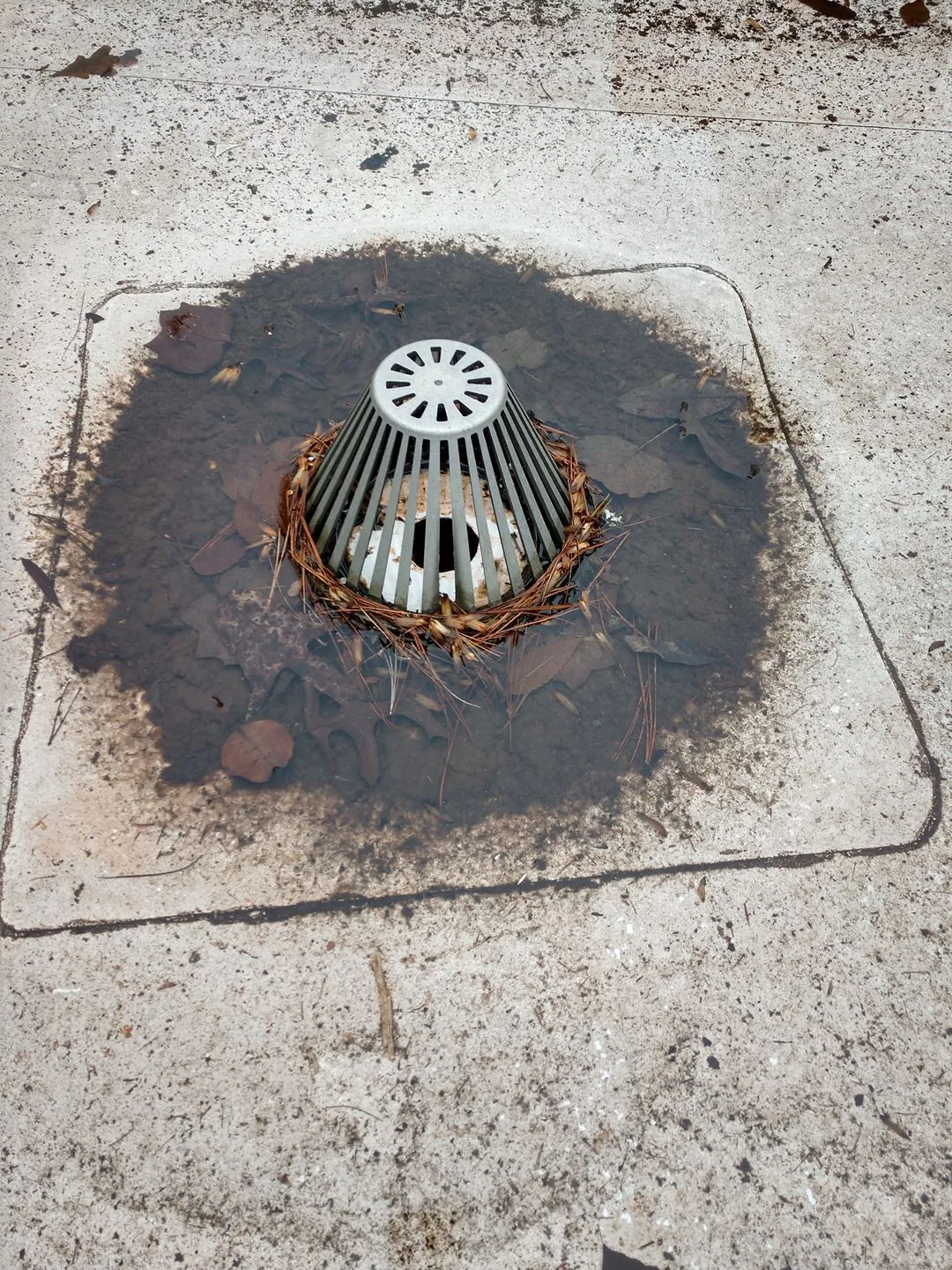
Trace the roof slope to drains, scuppers, gutters, and downspouts. Check for debris, ponding, rusted outlets, and discharge near large doors or service paths. Water that crosses a hangar threshold can affect the floor and equipment even if the roof membrane remains intact. Photograph outlets and note which bay, door, or apron area lies below the discharge.
Before adding insulation or a new roof layer, verify elevations at drains, door heads, wall transitions, and equipment curbs. Keep drainage open during work and confirm each outlet after cleanup. A drainage scope should name the outlets and corrections, not simply state that drainage was checked. If a temporary diversion is needed, agree on the discharge route with the facility contact and restore the intended path before closeout.
How should access and staging be planned?
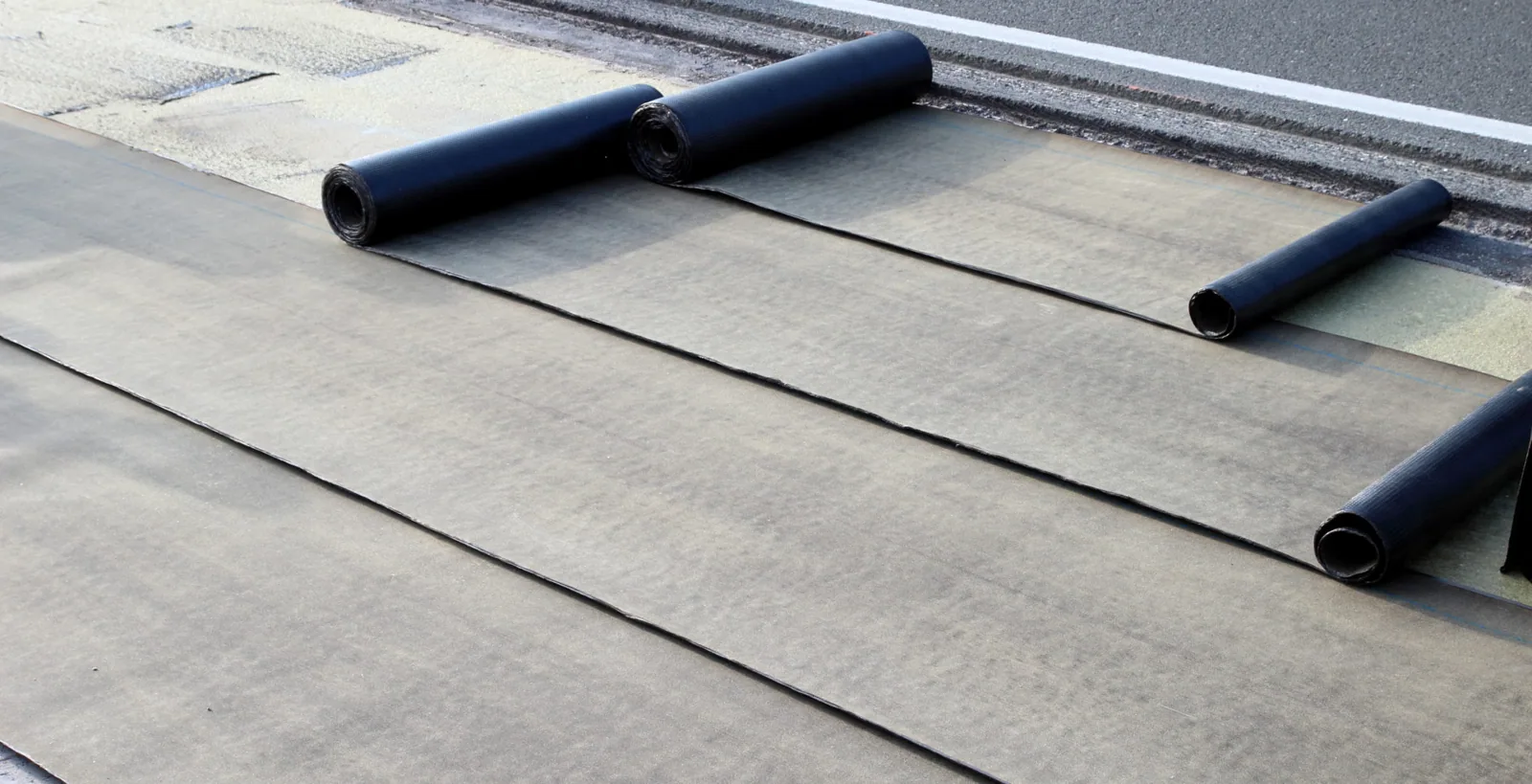
Confirm roof hatches, ladders, fall-protection tie-off points, crane or lift areas, and the route for panels or membrane rolls. Identify restricted areas and any site-specific escort or vehicle requirements. A long panel or roll may need a different lift plan from a small repair. Check ground bearing and clearance before equipment arrives, and protect pavement or apron surfaces where the owner requires it.
The phased work plan should describe which bay is unavailable, how aircraft or vehicles will be protected, and when the facility can resume normal use. Keep emergency routes clear and coordinate noisy work with maintenance or flight schedules as directed by site management. State the weather-tight condition expected at the end of each shift, especially where a roof section is opened over an occupied bay.

When should an owner evaluate a larger roof project?
A localized repair can be practical when panels or membrane, fasteners, insulation, and drainage around the defect remain serviceable. Repeated leaks along a long seam, widespread corrosion, wet insulation, or loose edge details may justify a larger survey. Use inspection records and approved openings to establish the affected boundary. Do not assume a similar panel profile means the same attachment or condition across separate bays.
Compare repair and replacement with consistent assumptions for aircraft protection, door access, lifting, staging, and daily closure. A replacement scope should identify bay phases, panel or membrane transitions, drainage changes, and responsibility for door-system interfaces. A warehouse may have different interior protection and loading patterns, while a flex-industrial building may contain mixed uses; the hangar plan needs its own operating constraints.
What should the hangar owner retain?
Keep a marked roof plan, dated photos, panel or membrane information, fastener and flashing details, equipment notes, and any open item. Identify which bays were closed during work and who confirmed them ready for use. Record changes to roof access, door interface, or support location. If a repair is temporary, specify the inspection date and permanent work still required.
Walk the roof and interior bay with the facilities lead. Confirm fasteners and debris are cleared, drains work, door travel is unobstructed, and protective controls are removed only with owner approval. Keep the contractor’s maintenance recommendations with the site record. If future trades add a support, antenna, or conduit, require review of the roof attachment and flashing detail before installation.
Questions About Aircraft Hangar Roofing
Sometimes, if the owner approves bay closures, aircraft protection, door operation, access controls, and daily roof closure.
Yes when the scope reaches door tracks, head flashing, supports, or operating hardware.
Map panel or membrane changes, framing transitions, seams, penetrations, drainage, and areas not inspected.
The owner assigns interior protection and relocation; the roofing scope should state the crew’s opening and closure responsibilities.
Consider it when inspection documents repeated seam failure, widespread corrosion, wet insulation, or failing attachment.
Related Roofing Work
 TustinSee how we handle itLearn More
 Anaheim CanyonScope, options and next stepsLearn More
 Commercial Roof InspectionWhat the work involvesLearn More
 Standing Seam Metal RoofingSee how we handle itLearn More
 Commercial Roof Drains and ScuppersScope, options and next stepsLearn More
 Occupied Building ReroofingWhat the work involvesLearn More
Plan roofing around hangar operations
Share roof drawings, door details, equipment locations, access rules, aircraft-protection needs, and leak history. We can inspect the assembly and define phased work.
Contact Us
Talk to a Santa Ana Commercial Roofer
Tell us about the building, the roof and what you are seeing. An active leak, storm damage, a worn membrane or a replacement you need to budget for, we will set a time to walk the roof.
After the visit you get photos of what we found and a written scope with clear options, so you can decide on repair, coating or replacement with real information in hand.
Call to schedule a roof assessment
Santa Ana, Orange, Tustin, Irvine, Costa Mesa and nearby cities
Request a Roof Assessment
©2026 Commercial Roofers Santa Ana
All Rights ReservedPrivacy PolicyTerms of ServiceSitemap